Emptying a House That Held Seventy Years
원문: 낡은 한옥을 비우는 첫날 #1 (실내 철거와 폐기물 정리)
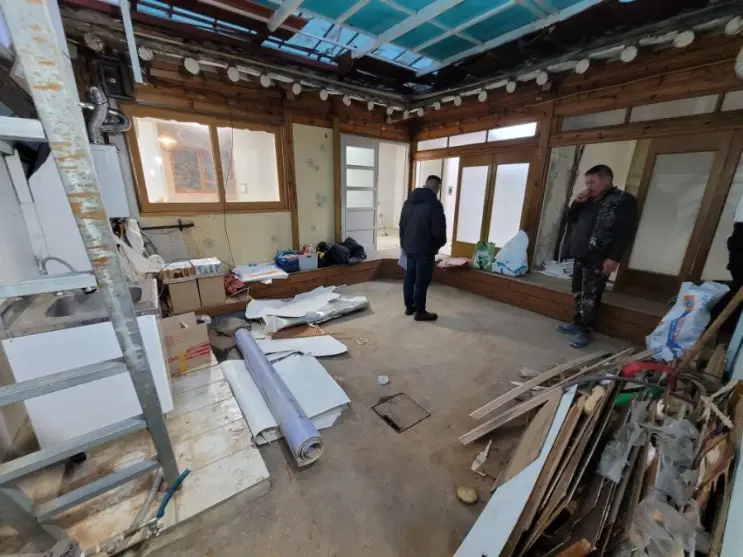
This is the first entry in the project we call Doiok: turning a 1956 hanok in Jegi-dong, Seoul, into a place guests can stay. Today demolition began — though it felt less like construction and more like drawing the outline of what was to come.
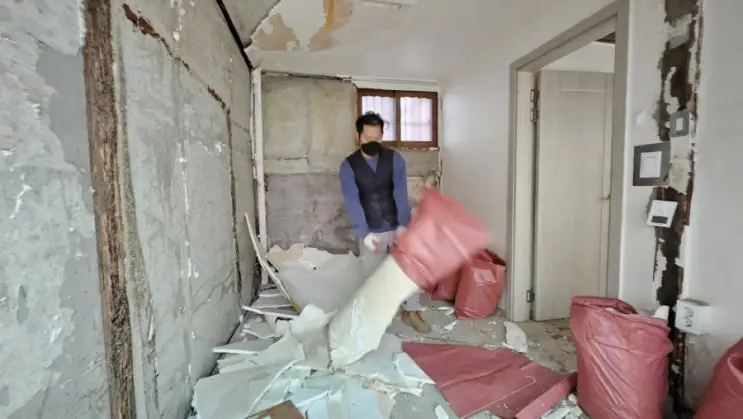
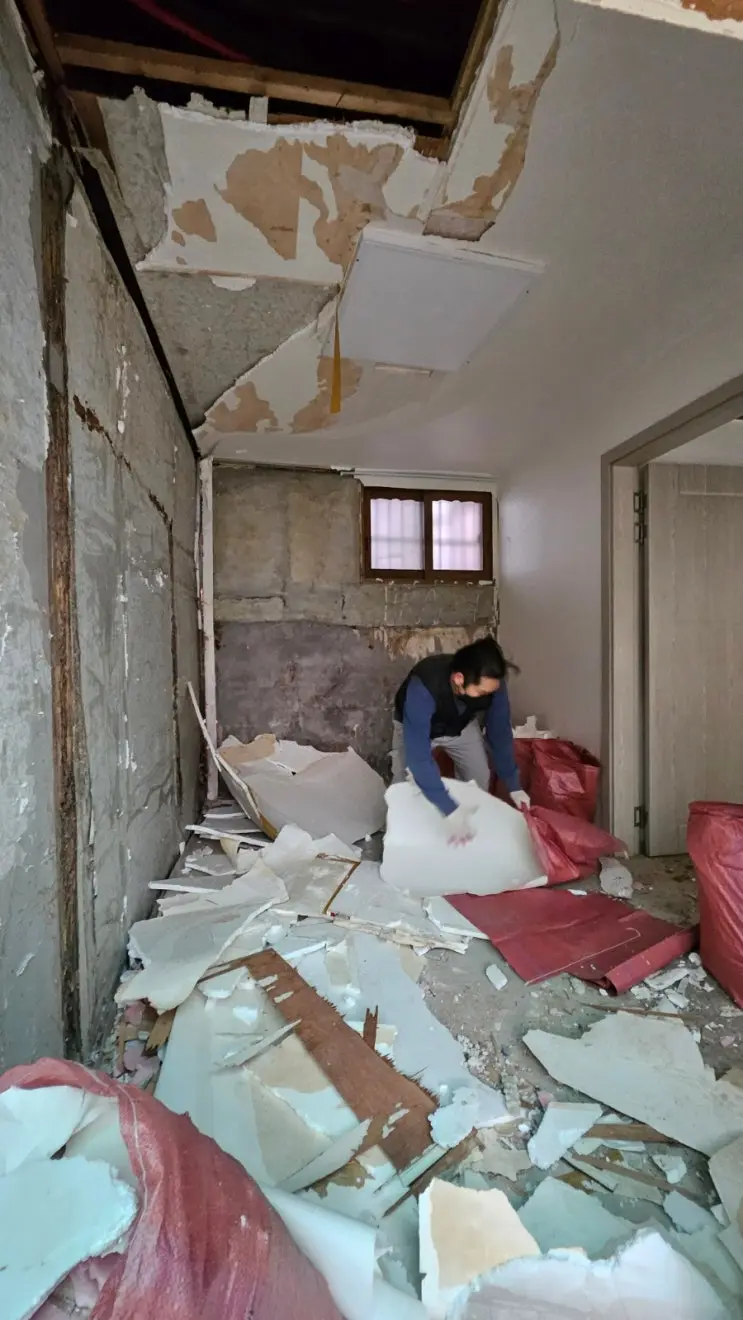
There were three of us on site: one professional demolition contractor, my younger brother (Doiok’s official boss), and me. The goal was specific — strip out the old ceilings and wallpaper so the carpenters could see the actual roof structure and posts before quoting the renovation.
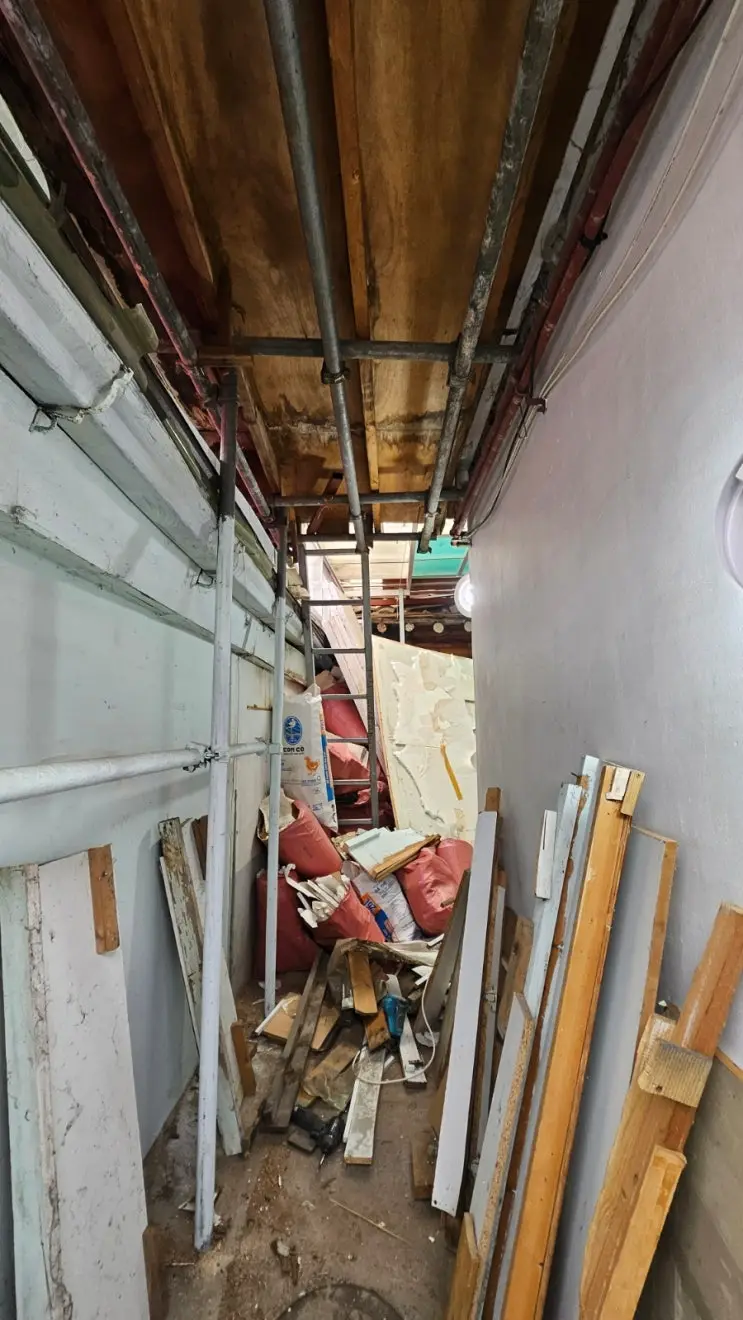
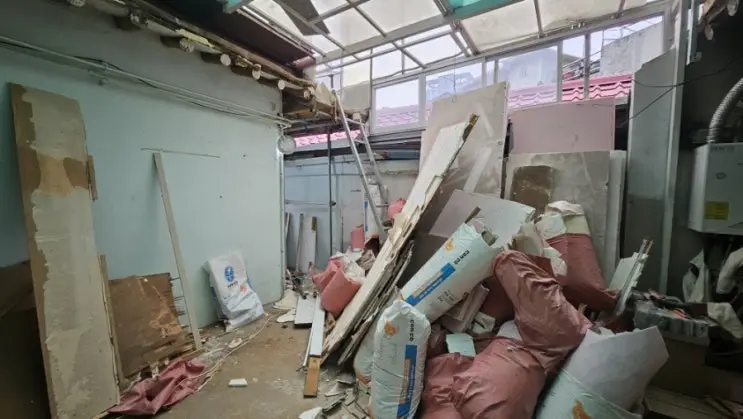
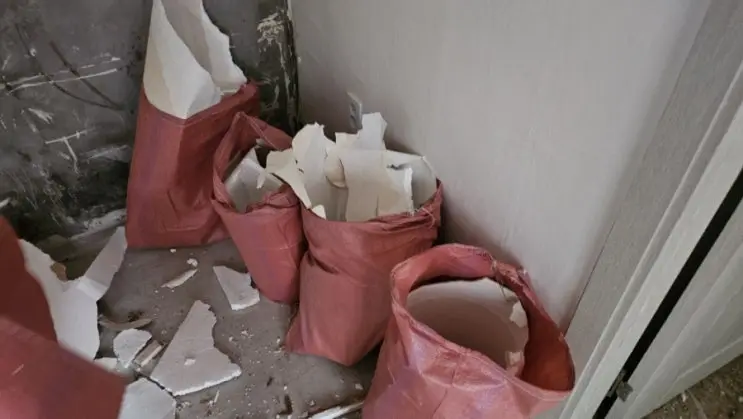
The moment we opened the door, the smell of old air met us. Dim rooms, lifted linoleum, wallpaper yellowed by decades. Behind the paper we found layers of old newspapers — the traces of the people who had lived here, peeled away sheet by sheet. The contractor worked through the ceilings while we bagged what came down: not just wallpaper but insulation, the wooden battens that held the false ceiling, on and on. The pile outside became a small mountain almost immediately. All of this was inside the house?
Two things we learned the hard way. First, hanok timber waste is sharp and full of hidden nails — handle every piece deliberately. Second, empty sacks are floppy and useless until you jam a springy strip of old flooring inside to hold them open. Make thirty of those before you start and the whole day goes faster.
In the middle of the chaos, the carpenter who would take on the project stopped by. He walked the emptied interior slowly, checking posts, rafters, floor. Then: “The bones are better than they look. This can be saved.” The posts were old but sound, and the walls were sharing the load — no structural problem. Keep the timber frame and the outer walls; everything else is ours to reimagine.
We ended the day loading timber waste onto a truck borrowed from the countryside with our father’s help. General waste, timber, stone, and scrap metal all leave a Korean demolition site by different routes — we started with the lightest.
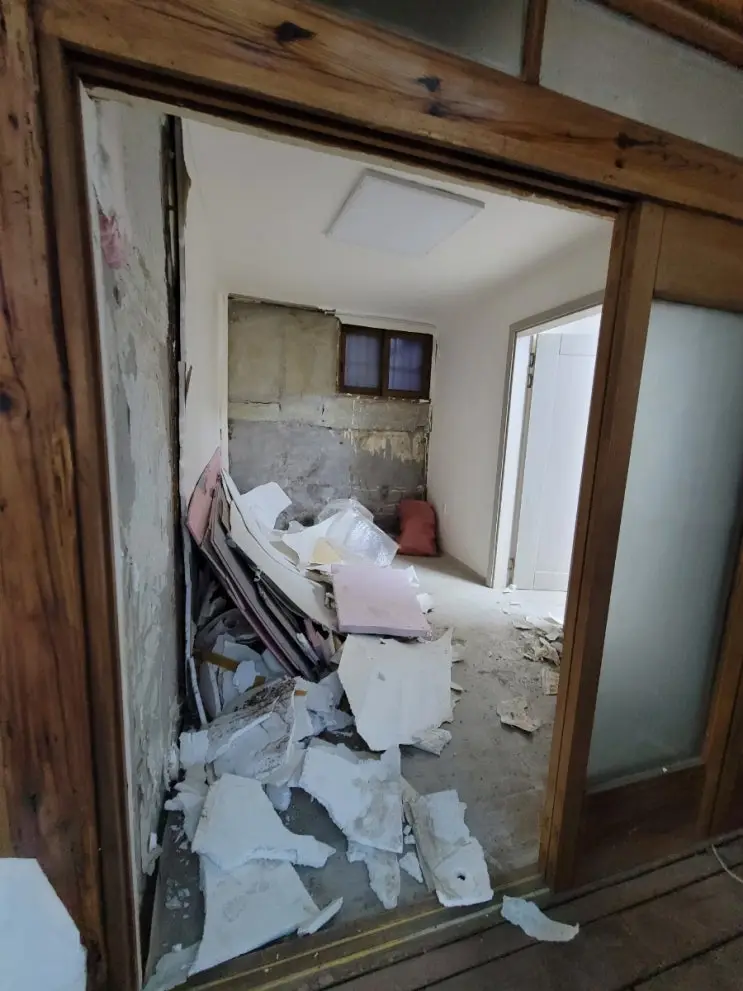
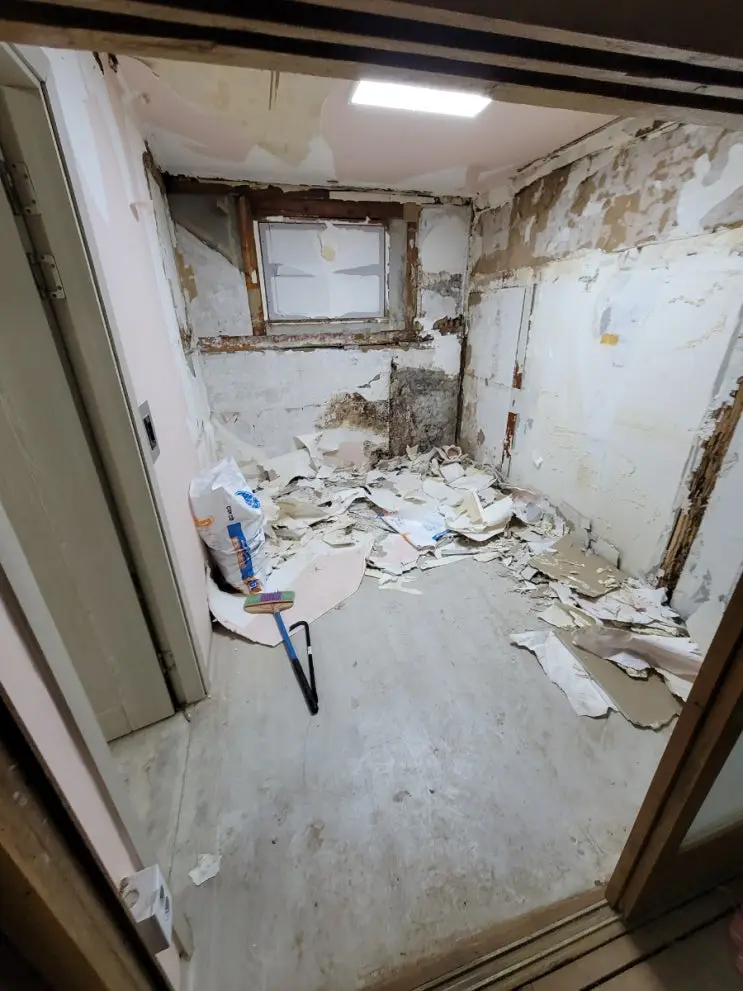
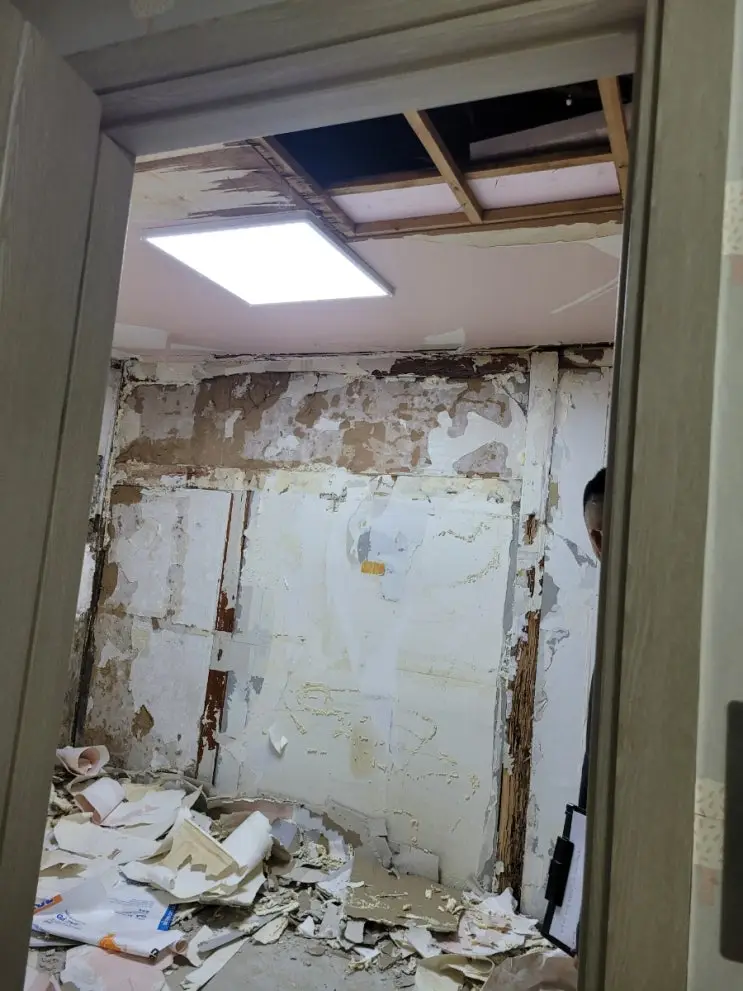
Originally logged in Korean on February 9, 2026 — read the original. Translated and edited by the brothers who did the work.