Grinding Seventy Years Off the Rafters — and Ordering Blueprints for ₩70,000
원문: 한옥 리모델링 기록 #3 (지붕 정비, 도면 제작 의뢰)
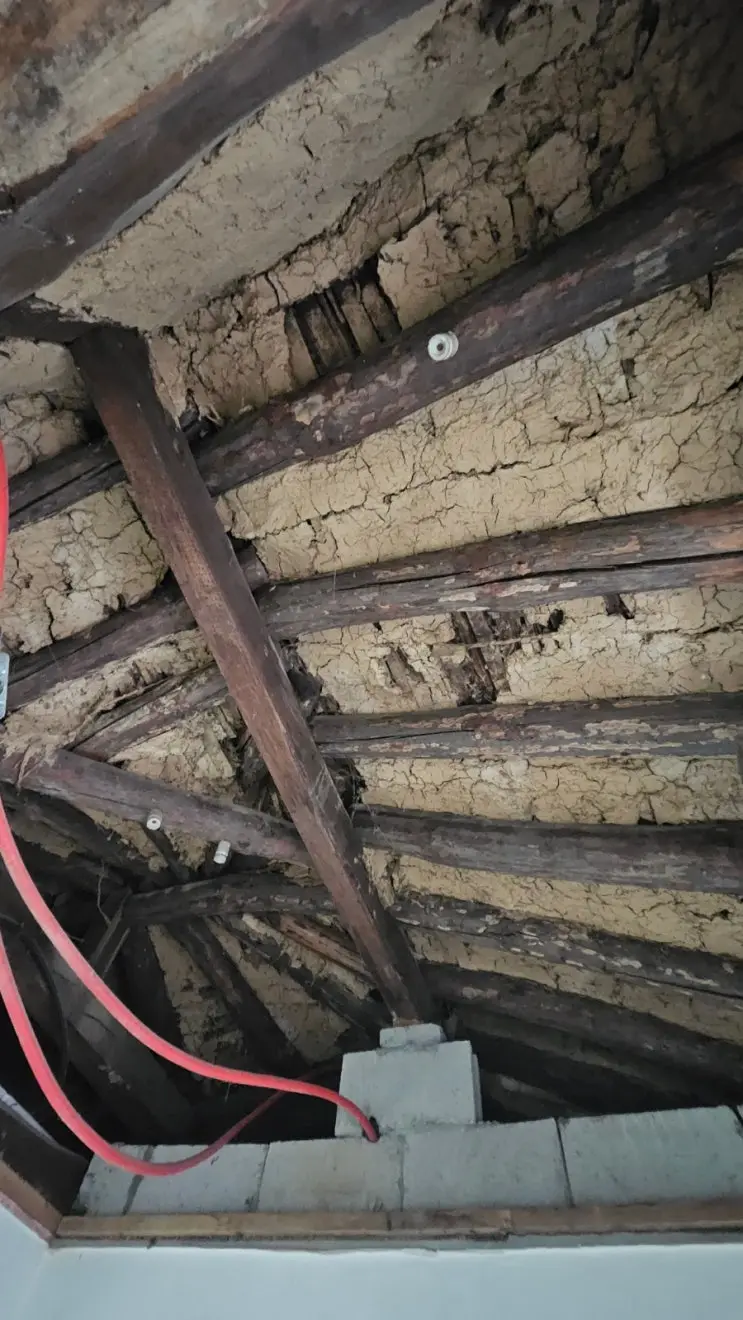
Days three and four. Demolition inside and out is done — now the groundwork for the roof begins.
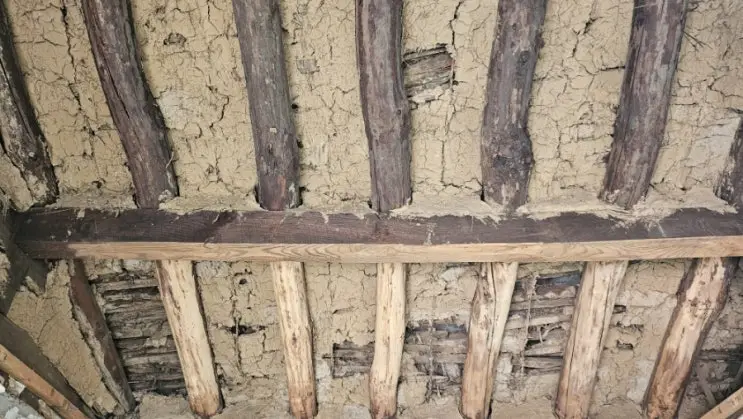
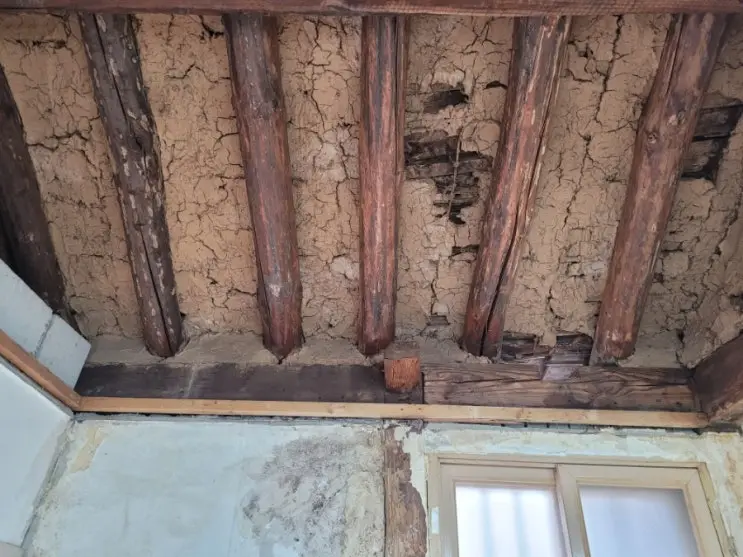
Grinding the rafters. With the false ceiling gone, we could finally inspect the exposed rafters. Structurally fine — but after decades hidden above a ceiling, the wood was faded and rough. If the rafters were going to be the visual heart of the interior (and in a hanok, they are), they needed to be dressed back to clean wood.
So we started grinding them by hand with angle grinders, one rafter at a time. We alternated between 40-grit and 100-grit flap discs: the coarse disc is fast on rough surfaces, the fine one flatters the grain but wears out so quickly that it barely justifies the disc changes. Forty-grit won.
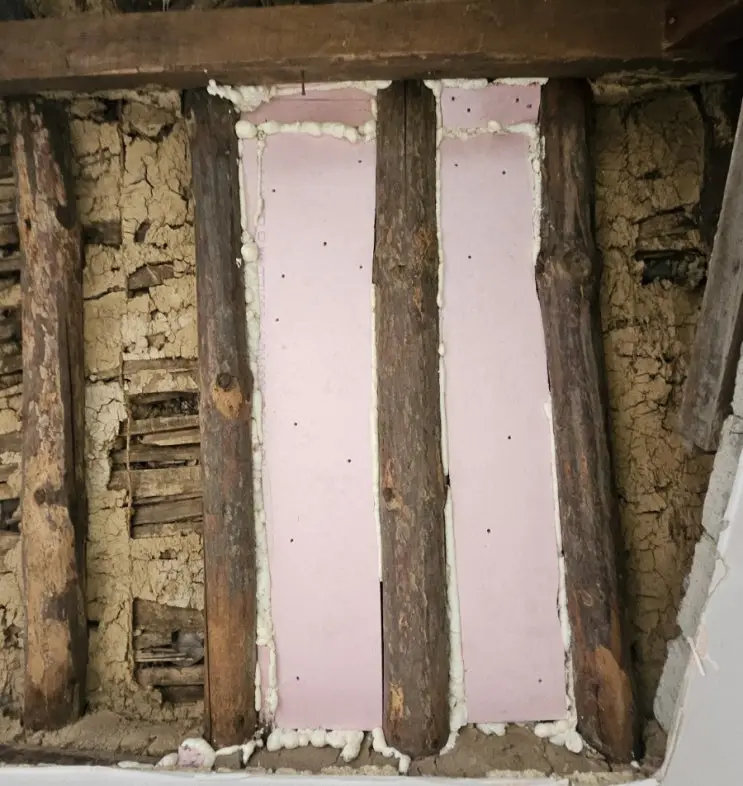
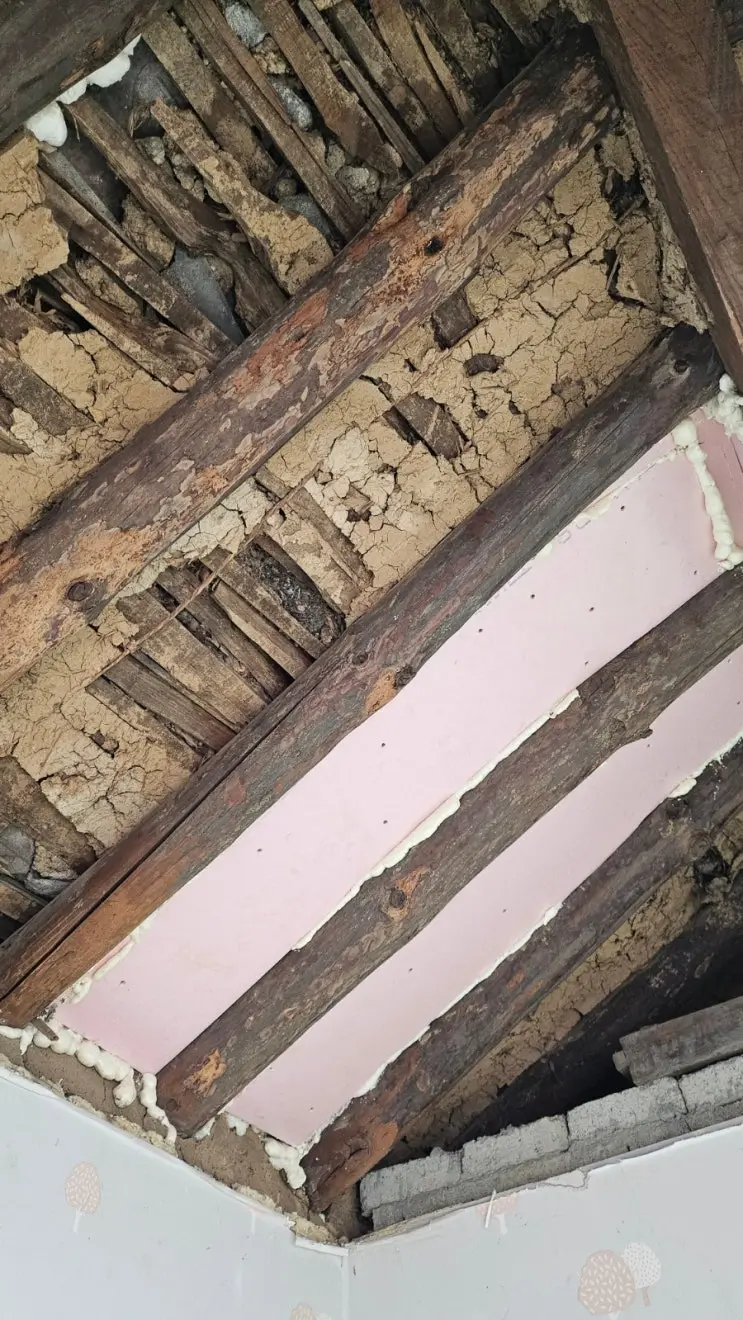
Testing the insulation approach. A comfortable guesthouse needs a properly insulated roof, and a traditional hanok roof has none. Before plastering the ceiling, we tested a method for the gaps between rafters: rigid pink foam board (Isopink) cut to fit, sealed with urethane foam. We trialed just two bays — it worked more easily than expected. Bonus: the voids where roof-soil crumbled away during tile removal can be packed with foam-board offcuts and urethane. Insulation and structural fill in one.
The blueprint problem. Like most hanok of its era, this house had no drawings whatsoever. We fixed that in two steps. First we measured everything ourselves — room dimensions, outlet and light positions, bathroom and window locations — and drew a rough plan by hand. Then we commissioned a professional to redraw it properly through Kmong (a Korean freelance marketplace) for ₩70,000.
Drawing the draft ourselves wasn’t just cost-saving. It forced us to learn the building’s body inch by inch — knowledge that paid off every single day of the next four months. The finished drawings would serve for planning, for coordinating carpenters, plumbers, and electricians, and eventually for permits and operations.
Demolition phase: closed. Preparation phase: open.
| What we paid for | Cost |
|---|---|
| Commissioned floor plan (via Kmong freelance platform) | ₩70,000 |
Originally logged in Korean on February 16, 2026 — read the original. Translated and edited by the brothers who did the work.