Jacking Up Sagging Rafters — and Registering the Business
원문: 한옥 셀프 리모델링 기록 #11 (부연설치 및 서까래 정렬 · 산자메꿈 · 벽체 추가철거 · 바깥채 채광 구상 · 사업자등록)
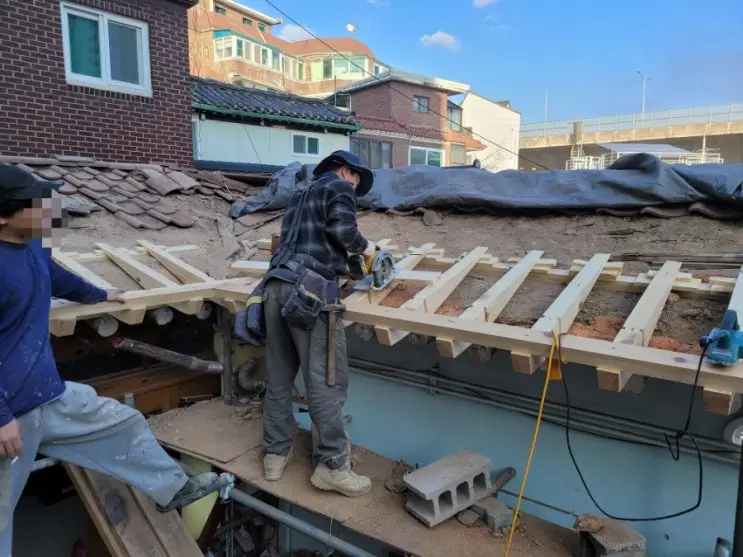
Day twelve. Roof structure, interior demolition, and — for the first time — paperwork that made this officially a business.
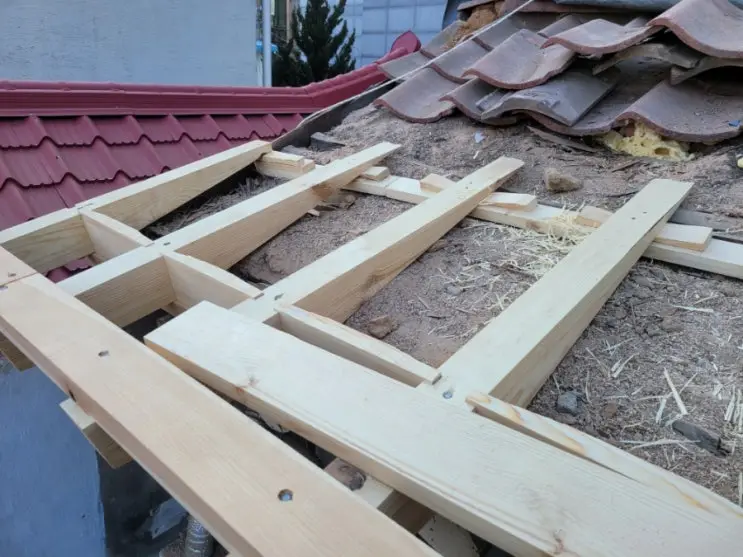
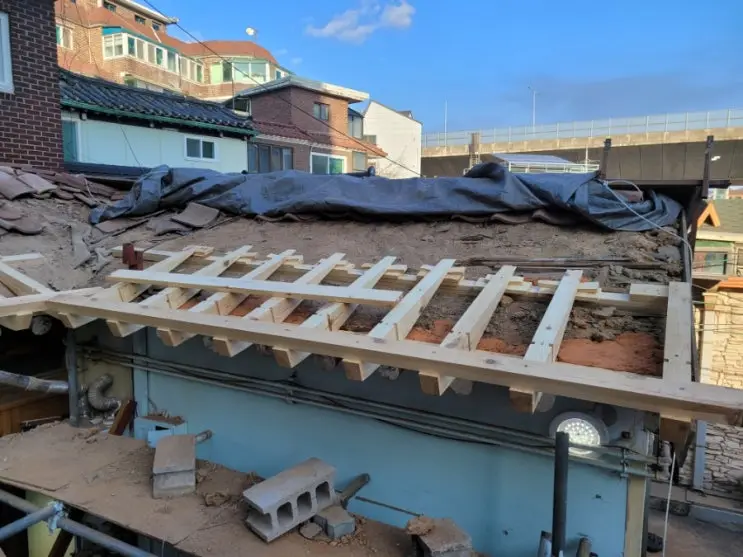
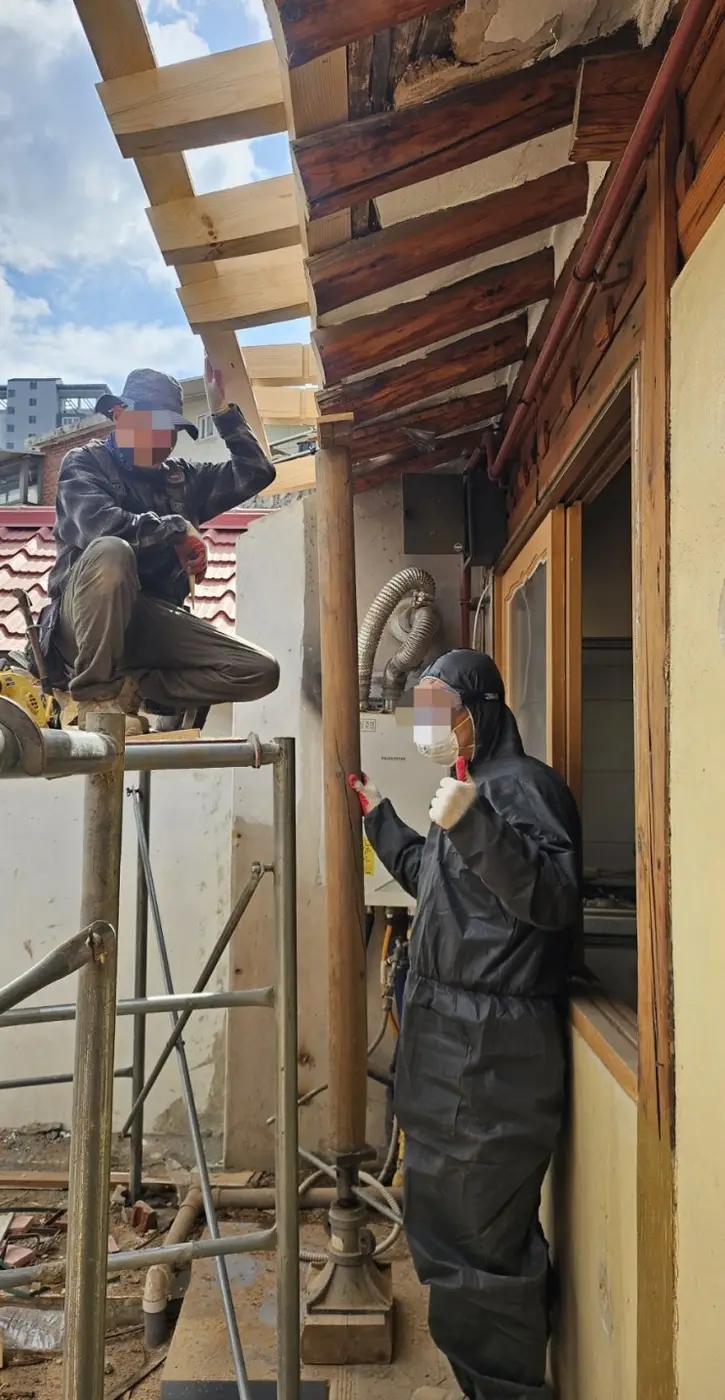
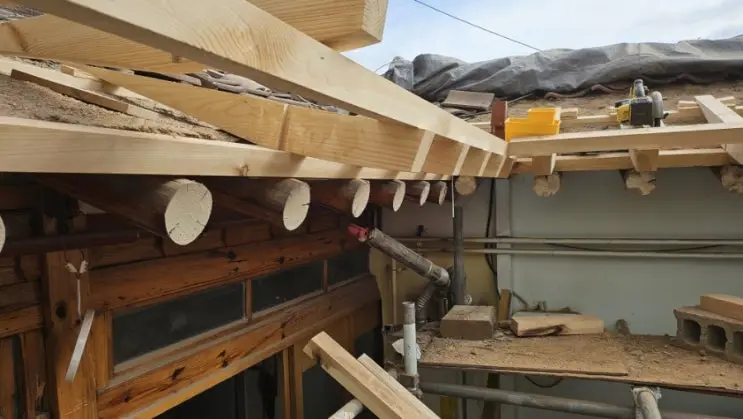
Setting the buyeon, one by one. Between the fixing strips installed yesterday, each buyeon went in aligned to the centerline of the rafter below it. The problem: seventy years of gravity. Sagging rafters had to be lifted with a bottle jack until level, then held with wooden wedges hammered into the gaps that opened up. Most of the day was line-setting, not fastening. The wedges stay until plastering, when they’ll be removed and the gaps closed properly.
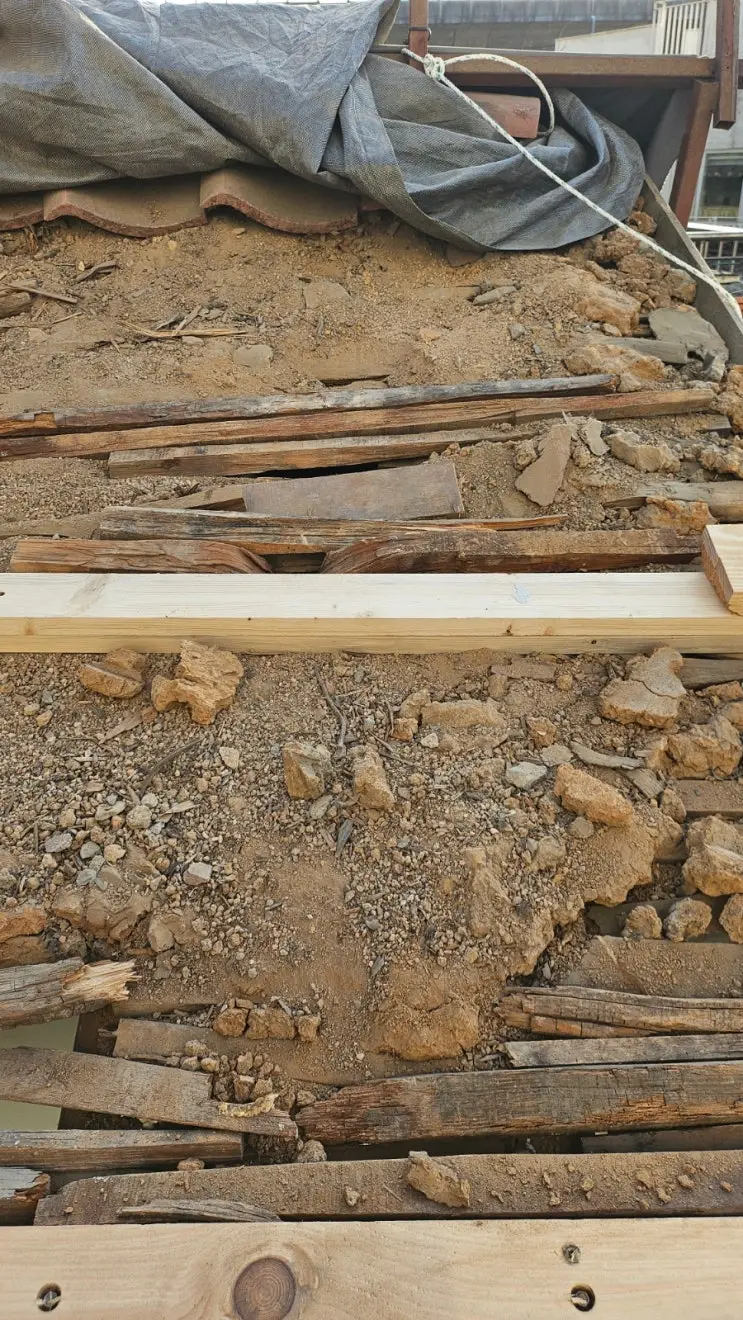
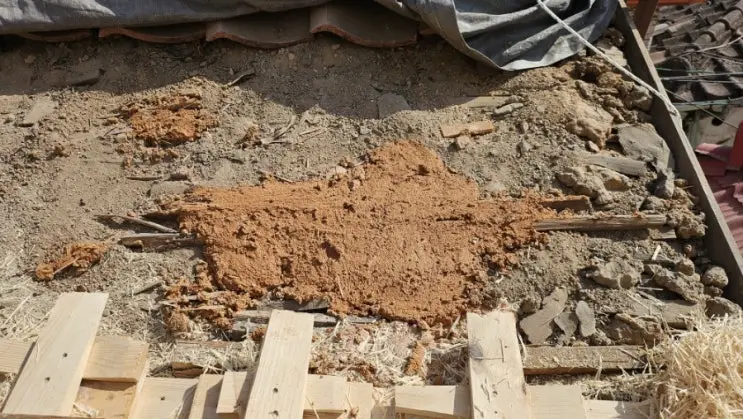
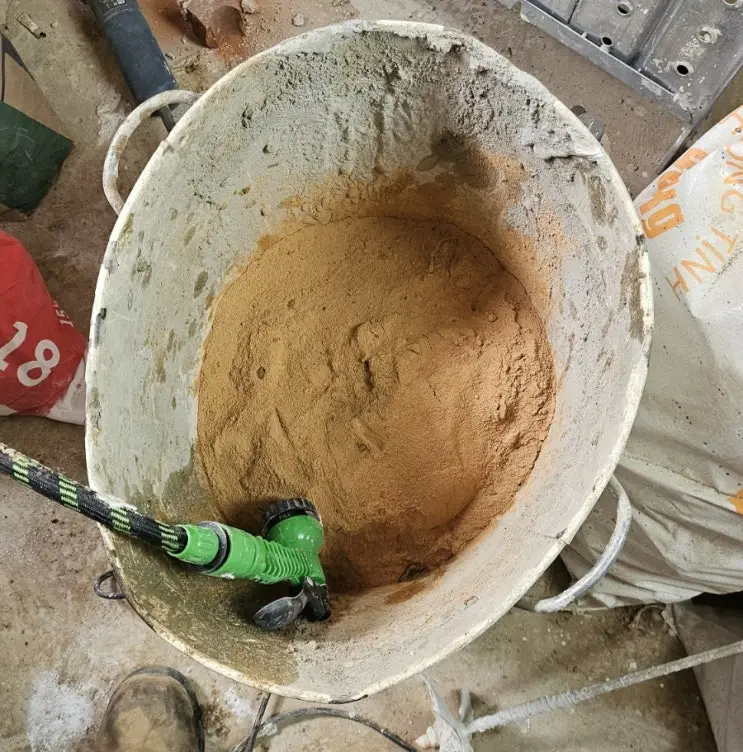
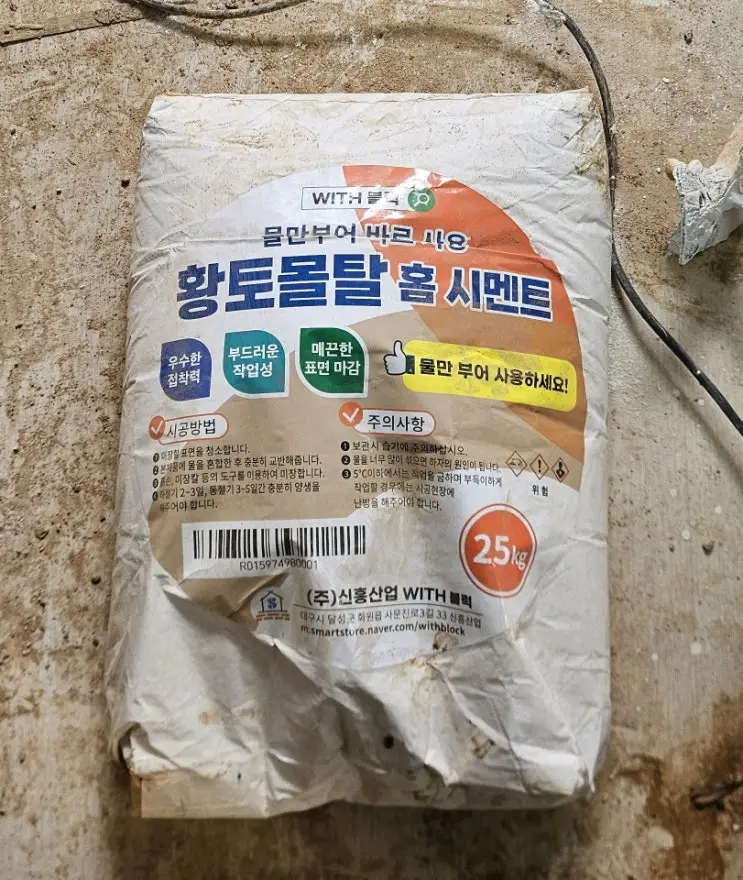
Packing the roof. Under a hanok’s tiles there is brushwood (sanja) and a thick bed of clay — and ours was full of holes from decades of settling plus our own tile removal. We packed the voids with new brushwood and capped them with red-clay mortar. This layer is the roof’s insulation and its waterproofing backup at once. It photographs like nothing; it matters like everything.
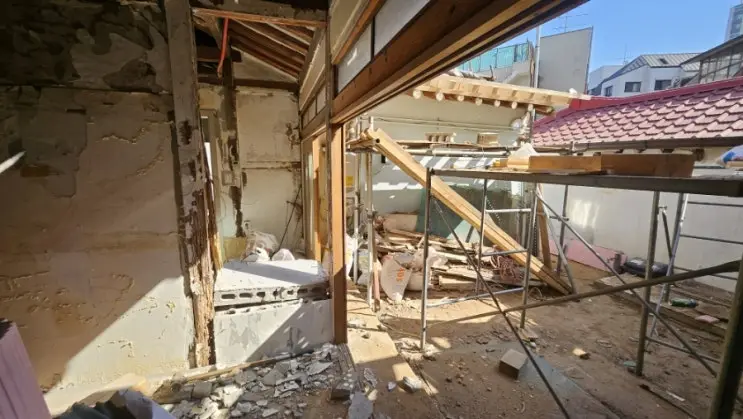
One more wall. The non-load-bearing wall between bedrooms 2 and 3 came down after a structural check. The two rooms merged into one flowing space — and we noticed something: an easier work path today is an easier living path for guests later. Circulation is the same thing for builders and residents. The accumulated stone waste — a full one-ton load — left by truck the same day.
Subsidy reality check. Follow-up with the district office: because our house wears Japanese-style tiles, only the cost of converting to Korean-style tiles qualifies for the hanok repair subsidy. Noted, recalibrated.
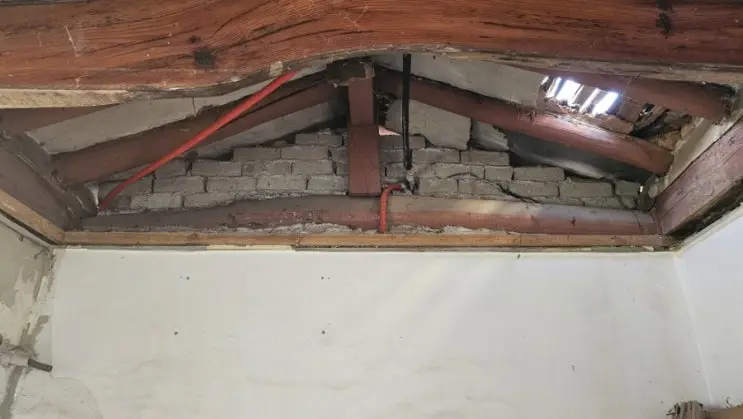
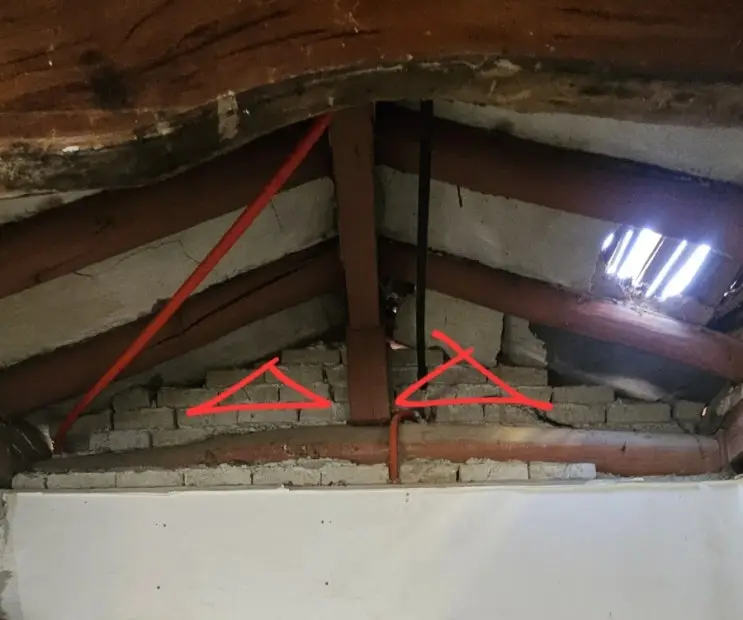
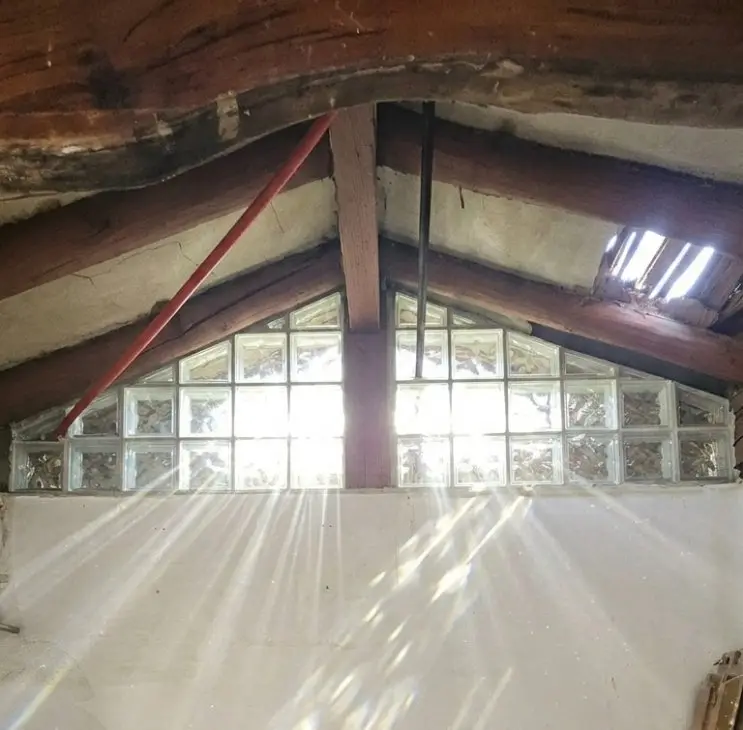
An idea from a hole in the roof. Sunlight falling through the open roof onto the annex floor was so beautiful that it produced a design idea on the spot: set glass blocks into the dark zone above the annex’s main beam — daylight without structural change. We mocked it up with an AI image generator to see it before committing.
And the milestone: Doiok’s business registration went through today. This stopped being a renovation and started being a company.
Originally logged in Korean on February 27, 2026 — read the original. Translated and edited by the brothers who did the work.