New Gables from New Zealand Pine — and a Race Against the Rain
원문: 한옥 셀프 리모델링 기록 #16 (외벽처마 평고대 작업 · 박공 설치 · 천장 마감)
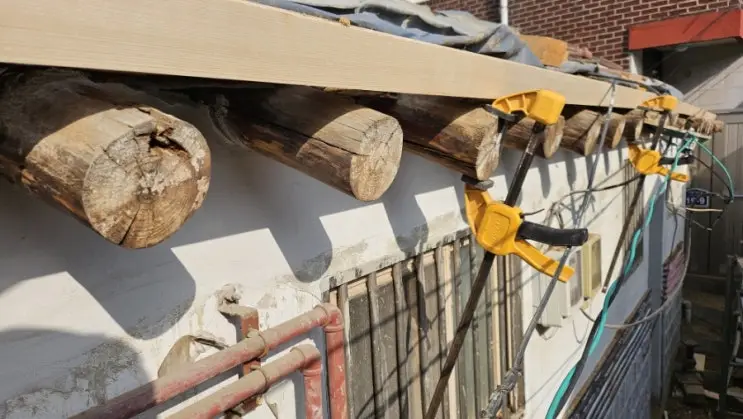
Day seventeen. Our carpenter’s second stint on site, and the roof edge became a finished thing.
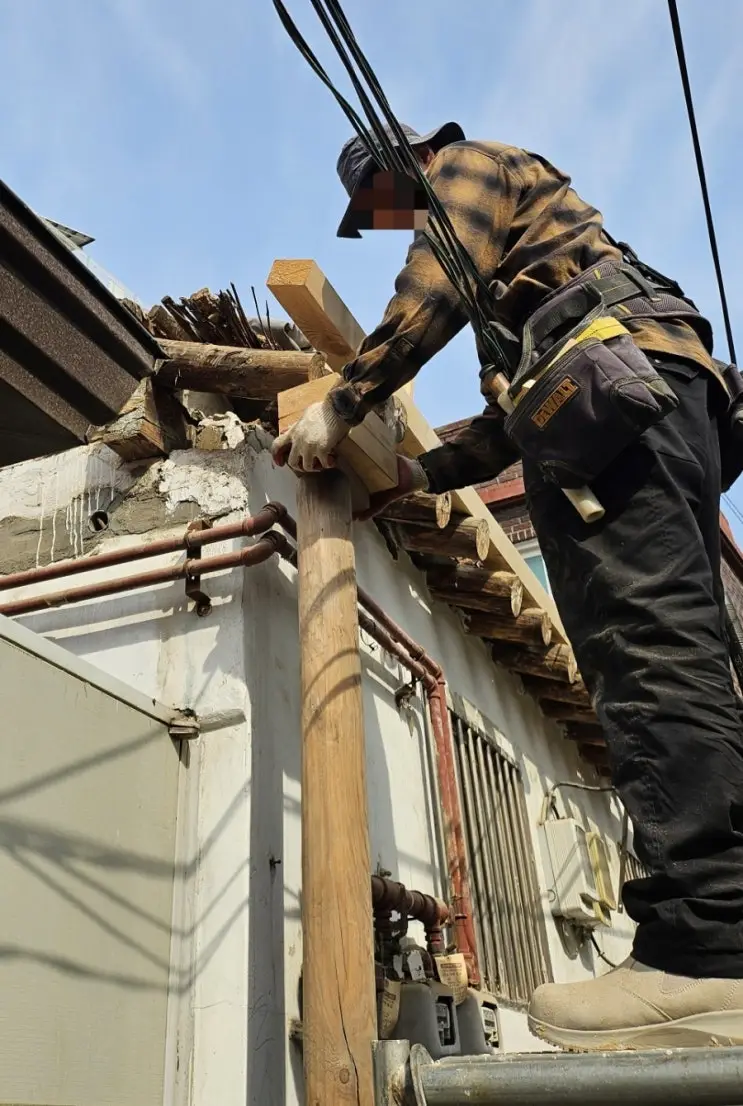
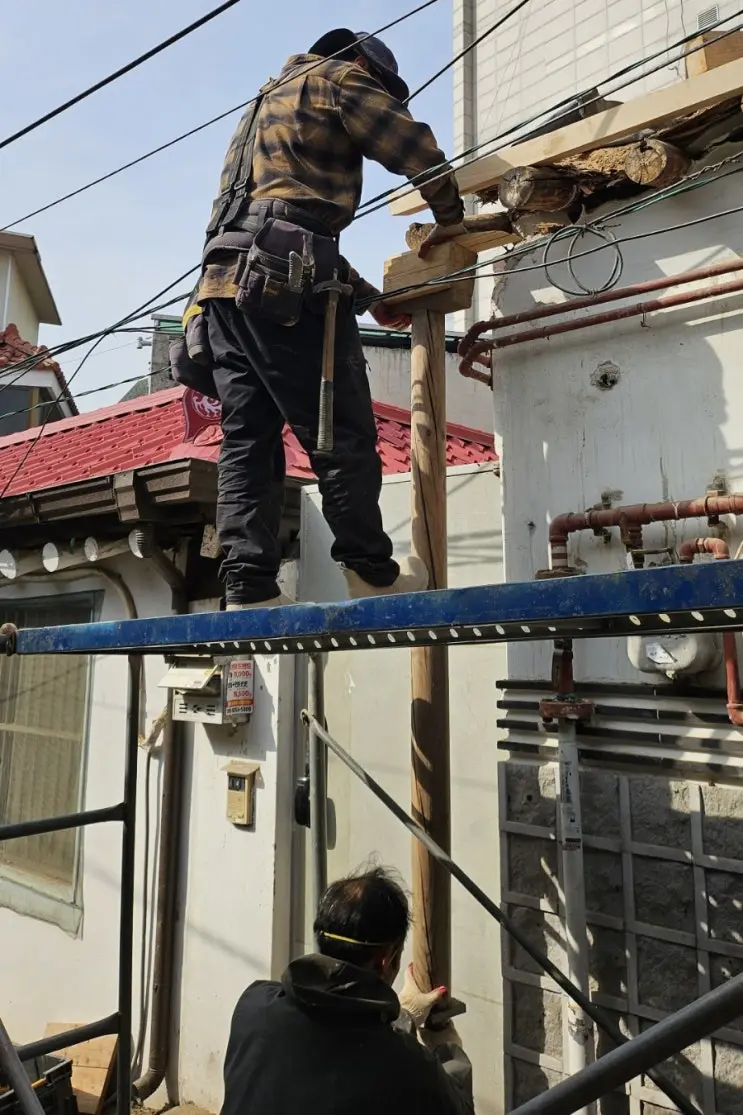
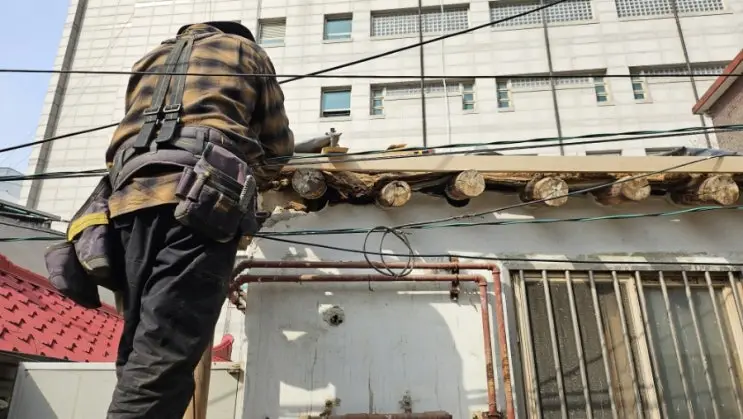
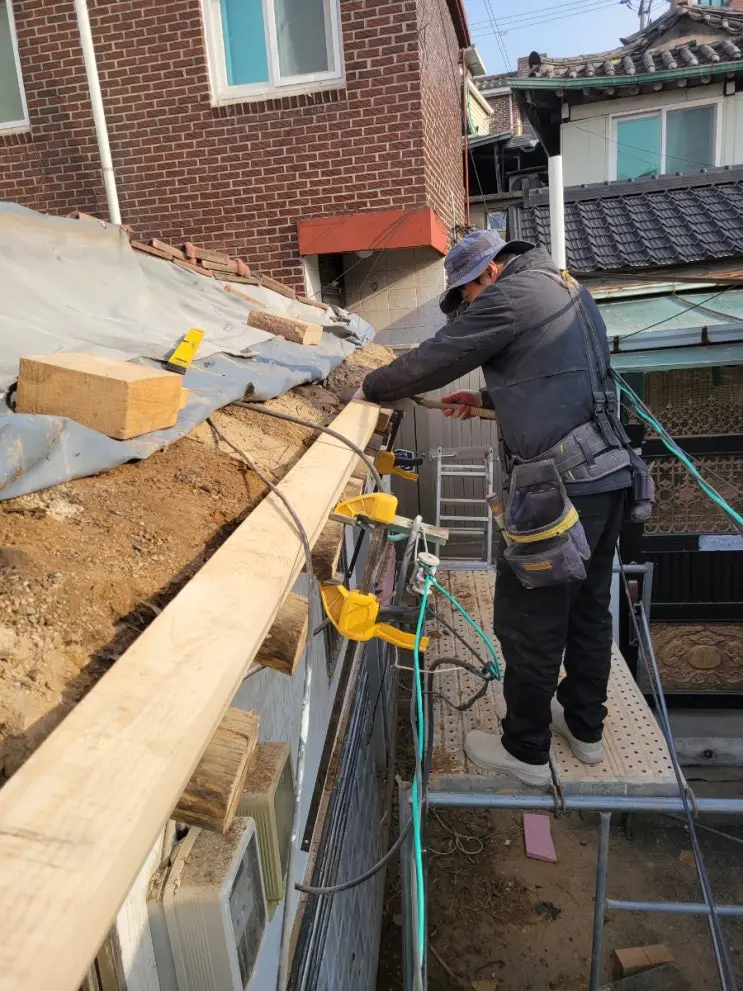
Leveling the eave line. On the street-facing eaves, the pyeonggodae — the long battens that the roof tiles will bear on — went up. On paper, a simple job: lay two long timbers across the rafter ends. In practice, our fastidious carpenter refused to bridge over sagging rafters, jacking each low one level before fixing the batten. Slower, and worth it: with the line corrected, the whole building looks disciplined in a way that’s hard to name but impossible to miss.
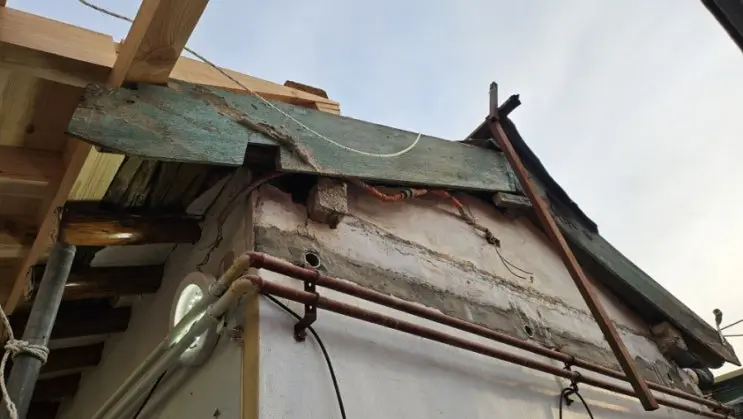
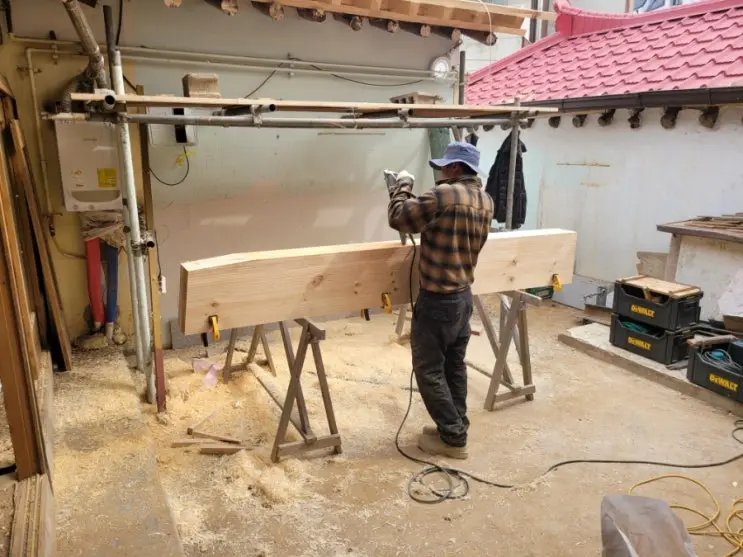
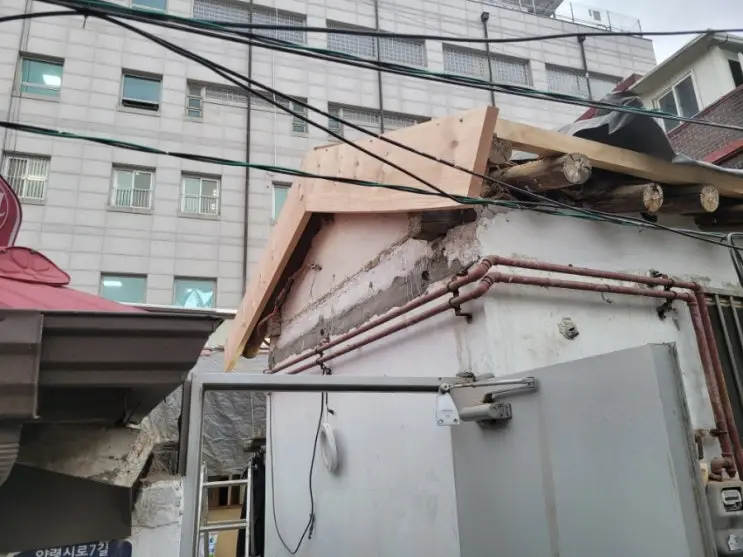
New gables. The old gable boards — the triangular side-closures of the roof — were too far gone to keep. Replacements were cut from New Zealand pine, shaped and hand-planed smooth before going up. From the ground it reads as “a board was attached”; in reality the shaping and planing consume most of the effort. Two of the four positions were hung today.
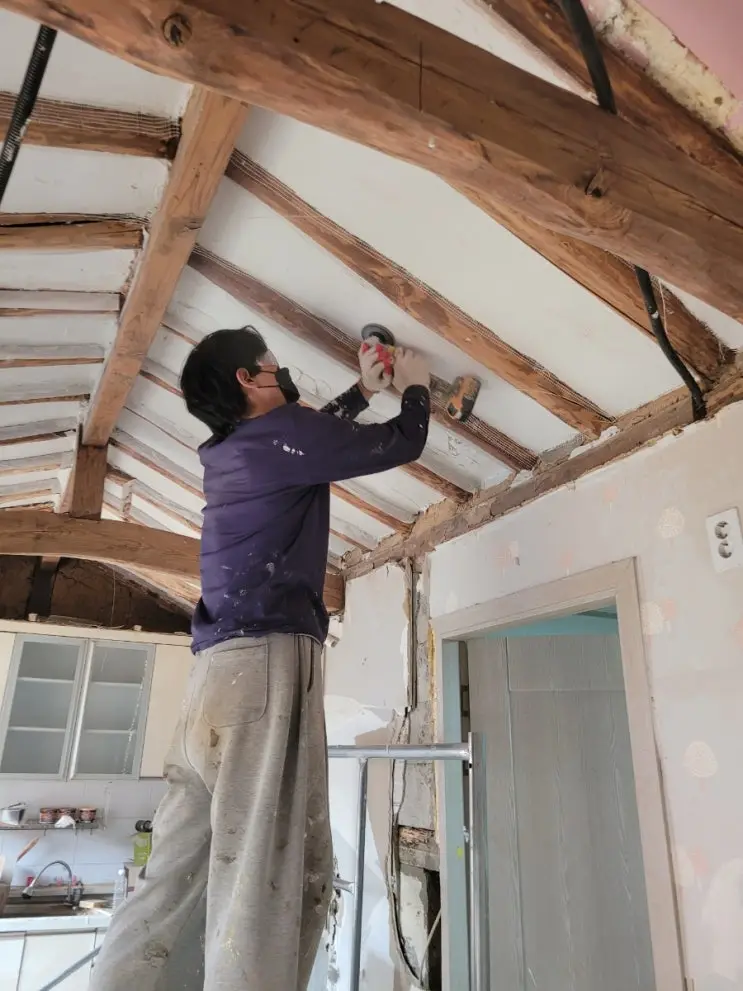
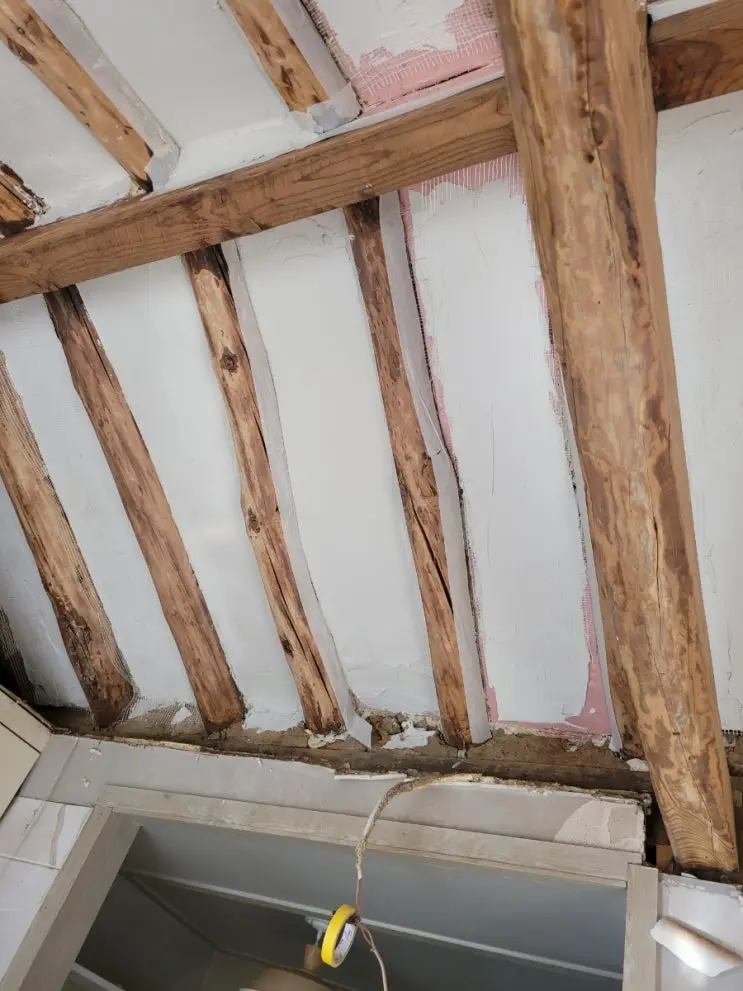
The ceiling verdict is in. Yesterday’s acrylic filler test cured clean, so it’s official: Acrylic Filler-E is the ceiling finish. Production began — with one added step. Trowel marks in the first coat had left rough patches, so we now sand each bay before filling. One tub of filler, eight bays finished. The ceilings are turning bright, and the rooms with them. The annex got eight bays of first-coat plaster too.
Materials landed: three more tubs of acrylic filler, the oil stain, eight boxes of wapyeon tile fragments.
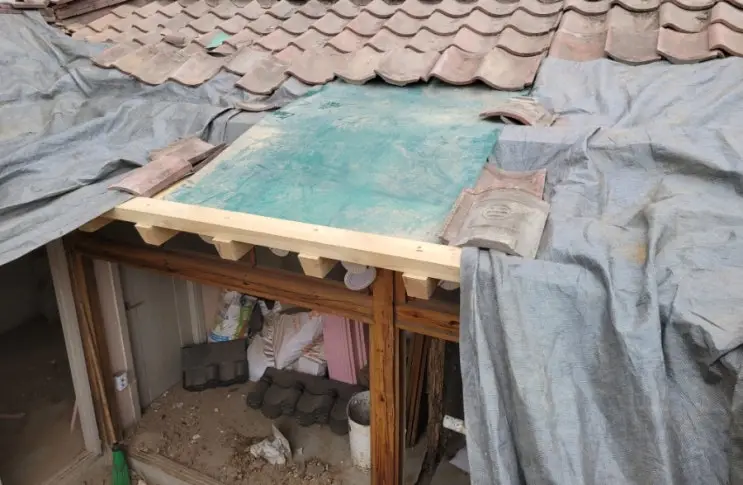
Then, the sky. Rain in the forecast, a roof partly stripped of tiles. We covered what we could with the salvaged acrylic panels from the old canopy — their retirement was short — and tarped the rest. The critical detail: shaping the tarps so water runs off. Where tiles are missing, a carelessly-laid tarp channels rain backward into the exposed clay bed, and wet roof-soil above finished ceilings is the nightmare scenario. We rigged, checked the flow paths, and went home watching the sky.
Originally logged in Korean on March 5, 2026 — read the original. Translated and edited by the brothers who did the work.