Eighty Percent of a Roof in One Day
원문: 한옥 셀프 리모델링 기록 #24 (지붕 판기와 시공 · 별채 단열 작업)
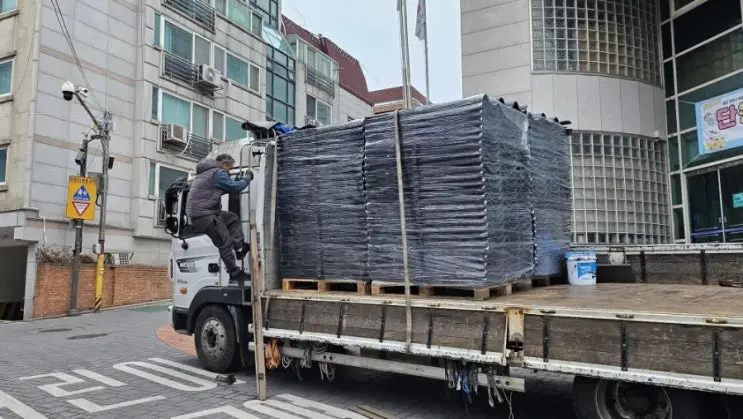
Day twenty-six. The house began wearing its new roof.
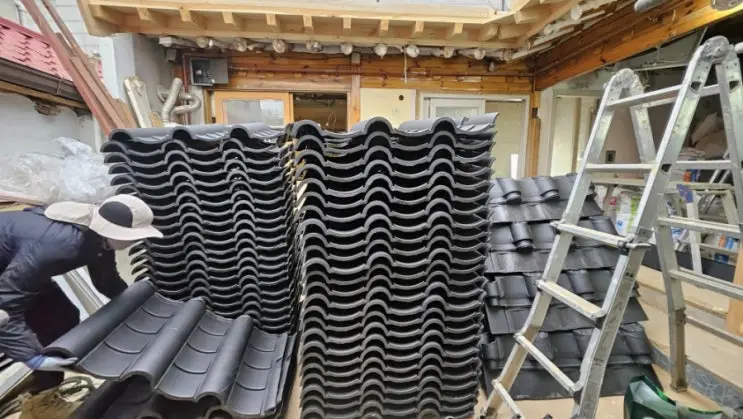
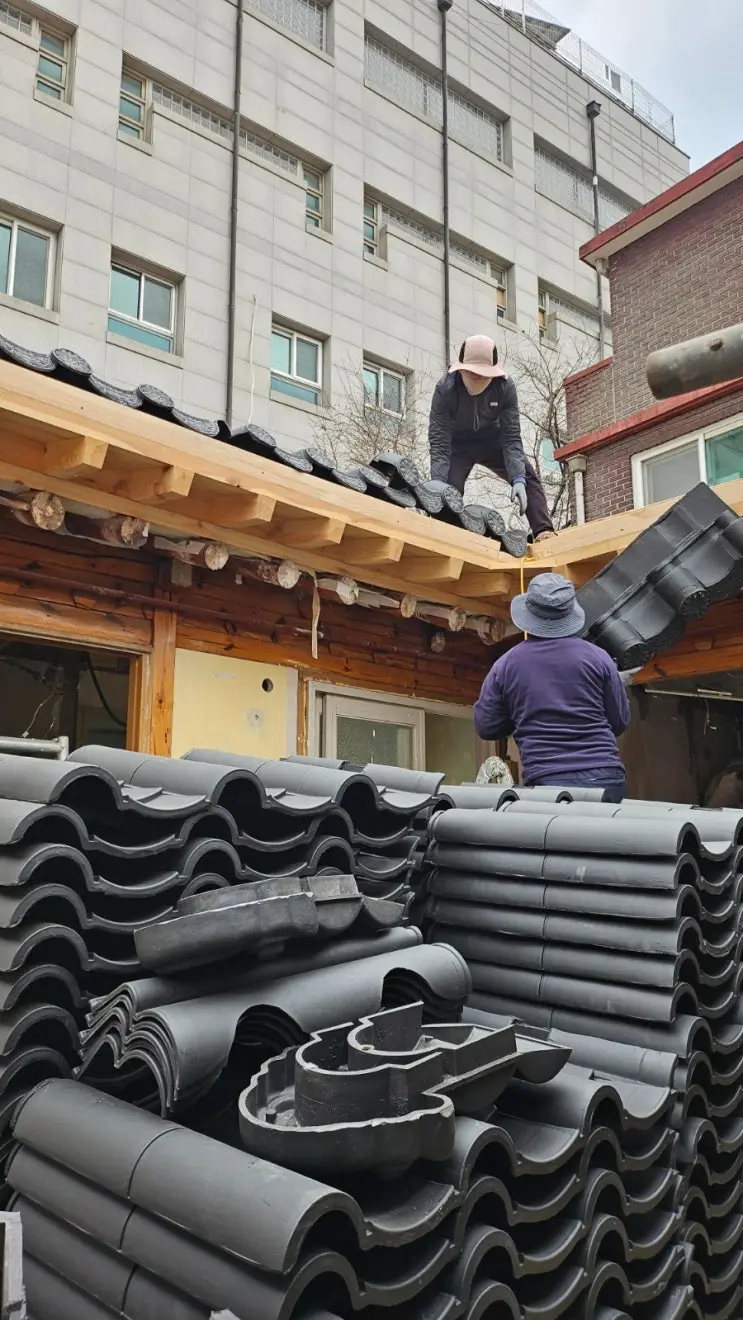
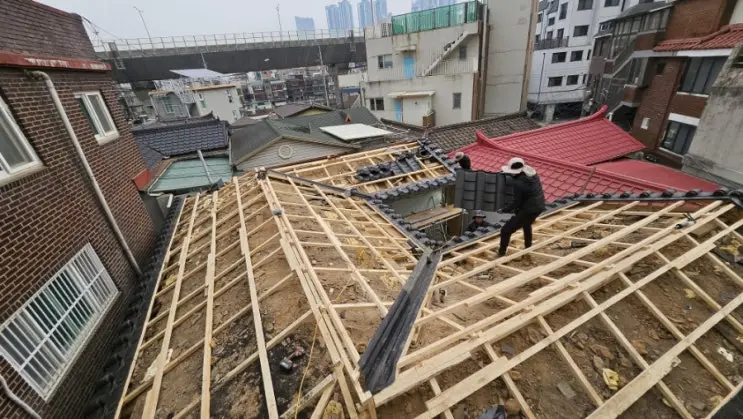
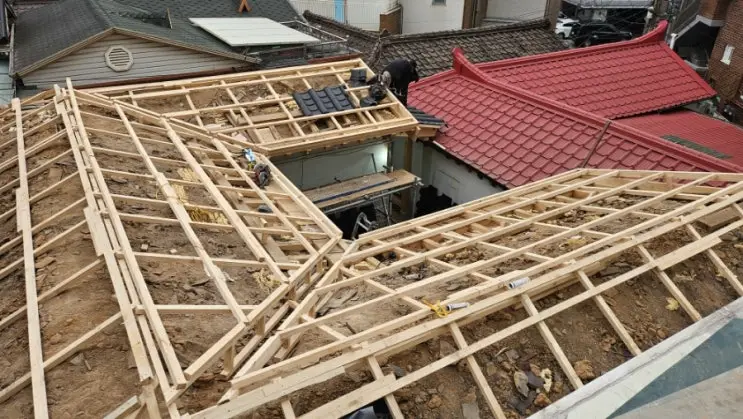
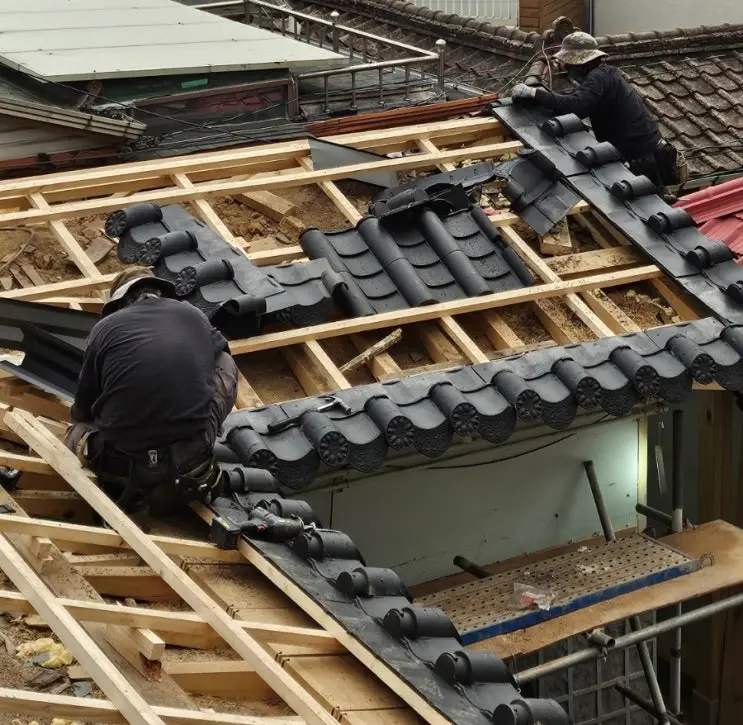
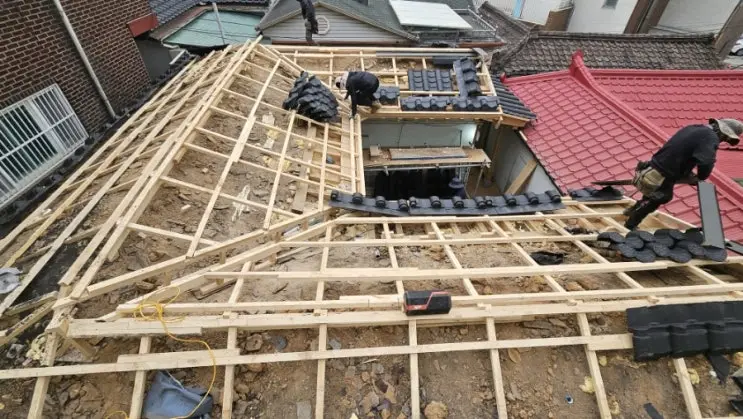
Tiles, at speed. The main event: pan-giwa — lightweight interlocking roof tiles — going onto yesterday’s batten grid. A forklift delivered seven pallets to the gate; from there, four workers relayed them up and across the roof, laying as they went. By the end of the day roughly 80% of the roof was tiled.
The pace was frankly astonishing to us — after weeks of stripping the old roof tile by tile by hand, watching the replacement go on in panel-sized strides felt like time-lapse footage. This is the argument for lightweight tiles in one image: a fraction of the weight of traditional kiwa (kinder to a 70-year-old frame), interlocking coverage that installs in large runs, and a profile that still reads as a proper tiled hanok roof from the street. Detail work — ridge, edges, flashing — will take one more day.
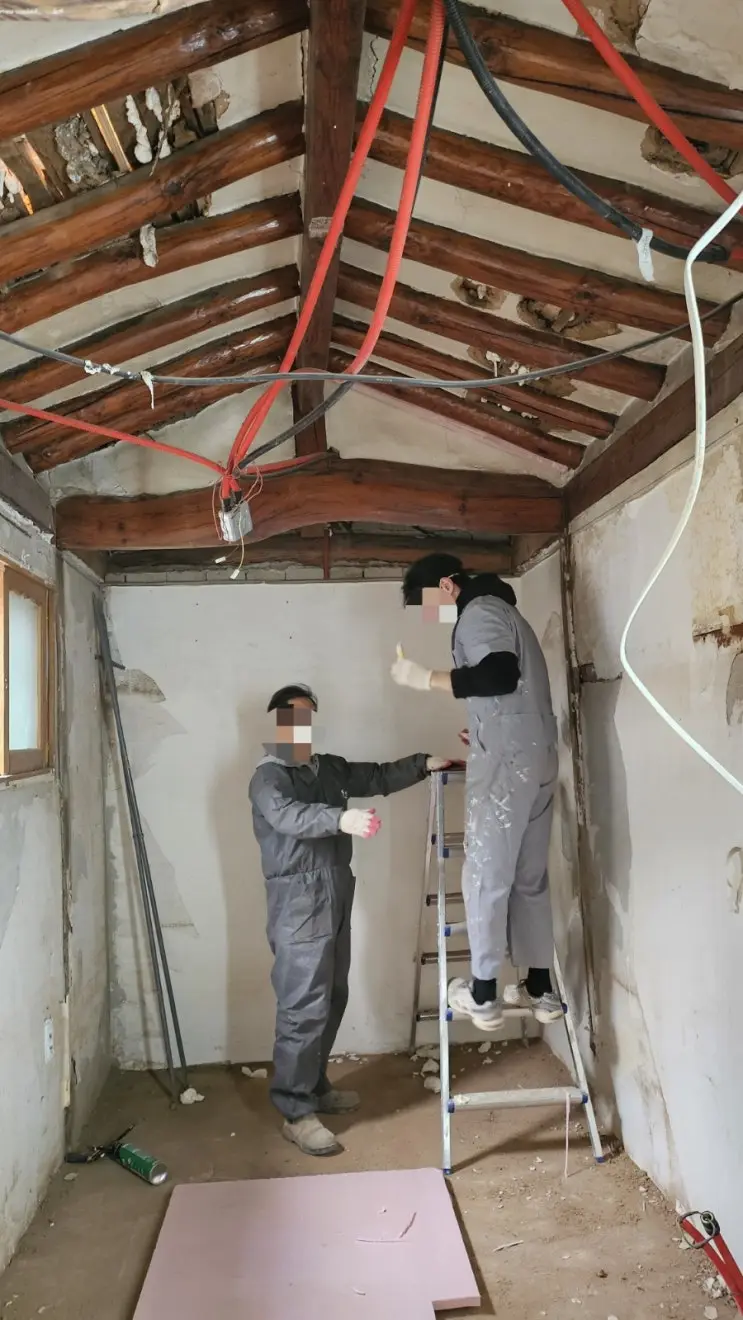
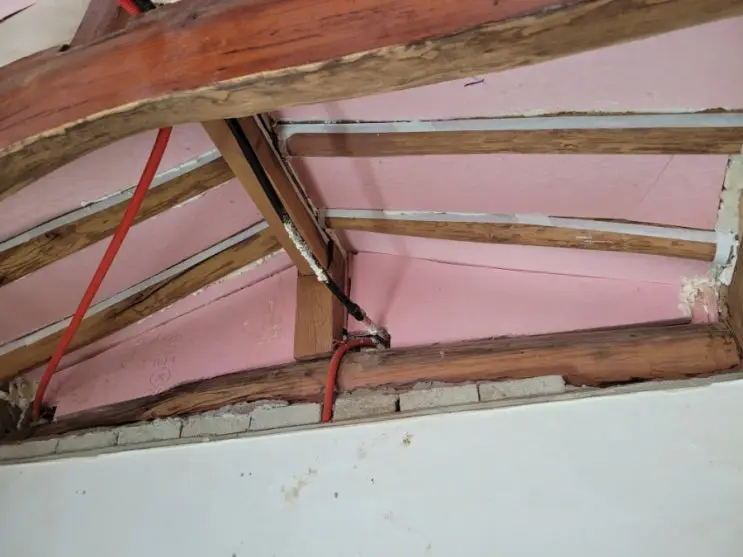
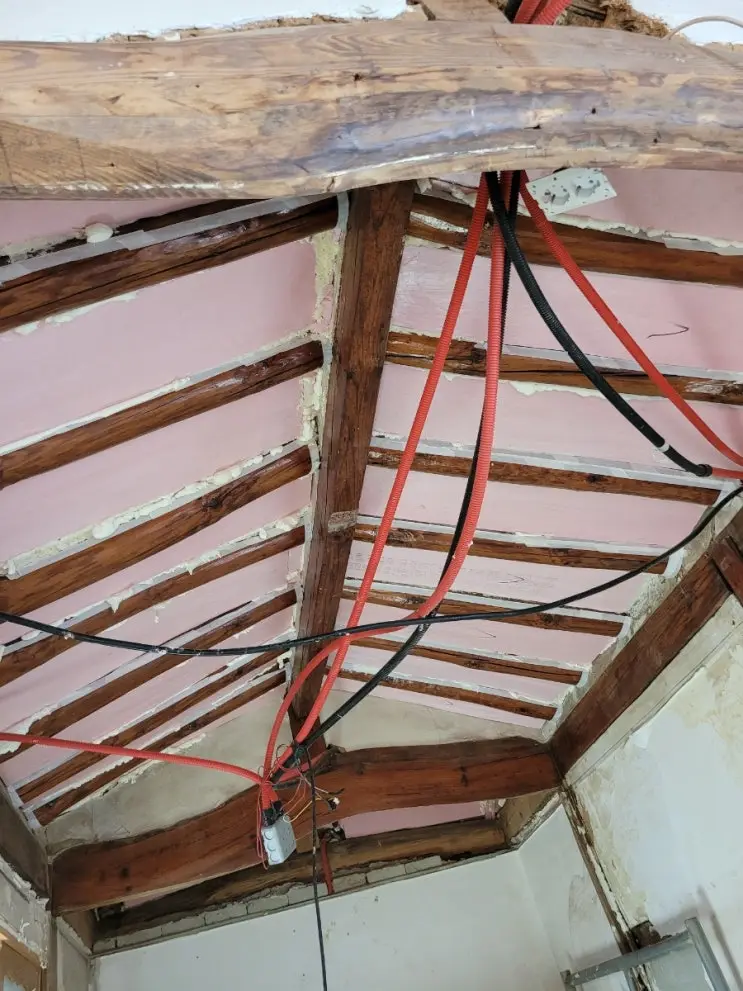
The annex ceiling gets its due. Inside, we worked the annex (byeolchae) ceiling. The original plan had been to leave it alone — it was the one clean ceiling in the house. But the roof work had shaken sections of its old finish loose, and a half-secure ceiling above a guest room is not a risk worth decorating over. So: the full treatment, same as everywhere else. Foam board cut to each bay between rafters, urethane foam bonding the faces and sealing the edges. About 80% complete by day’s end.
Two decisions today — one made by a contractor’s efficiency, one made by our own caution — and both in the same direction: do it properly, while the house is open.
Originally logged in Korean on March 15, 2026 — read the original. Translated and edited by the brothers who did the work.